
Disclaimer: Airdrop participation involves significant risks, including smart contract failures, bridge vulnerabilities, and the possibility of zero rewards. This research is for informational purposes only and does not constitute financial advice. Always conduct independent due diligence.
What Is Abstract Chain?
Abstract is a consumer-oriented Ethereum Layer 2 network built on the ZK Stack (ZKsync’s modular ZK rollup framework). It was developed by Igloo Inc., the same entity behind the Pudgy Penguins NFT brand. The chain launched its public mainnet in January 2025, positioning itself as a high-throughput, low-cost execution environment optimized for consumer applications—gaming, social, and NFT-native use cases.
Its native governance and utility token, ABS, was distributed to early ecosystem participants through a structured airdrop in the weeks following mainnet launch.
Financing Moat: Institutional Signal Analysis
Igloo Inc. secured an $11 million Series A round in early 2024, with participation from notable Web3-native and crossover funds. The Pudgy Penguins brand itself achieved a peak secondary-market valuation well into nine figures, providing collateral-level brand equity that most new L2s cannot replicate. This brand moat serves a dual function: it creates an organic distribution channel (existing Pudgy Penguins holders as natural day-one users) and reduces the marketing cost of user acquisition—a critical factor when evaluating whether a project actually needs a token airdrop to bootstrap liquidity.
Risk factor: The $11M raise implies a relatively lean war chest by L2 standards compared to Arbitrum’s $120M+ or zkSync’s $458M. Runway constraints could pressure the team toward premature token emission, which historically compresses post-TGE price action.
Token Logic: Why ABS Had Structural Necessity
The ABS token was not a marketing afterthought. Abstract’s architecture on the ZK Stack requires a sequencer mechanism, and decentralizing that sequencer through token-based governance creates genuine protocol necessity for issuance. Combined with fee rebate mechanics and ecosystem grant distribution, ABS carries utility vectors that go beyond speculative value. This distinguishes it from “airdrop-only” tokens with no downstream protocol use.
Additionally, the consumer-app thesis requires a native gas token that users interact with repeatedly—a higher-frequency engagement model than DeFi-only chains, which in theory supports more sustained token demand.
On-Chain Activity: What the Data Shows
| Metric Observation Source | ||
| TVL at Mainnet Launch | ~$40M within first 30 days | DefiLlama – Abstract Chain |
| Testnet Unique Wallets | ~2.5M+ addresses pre-mainnet | Abstract Official Dashboard |
| ABS Airdrop Recipients | Tiered by on-chain interaction depth | abs.xyz – Official Claim Portal |
The 2.5M+ testnet wallet figure is notable but demands scrutiny. High wallet counts on consumer L2 testnets are almost always inflated by Sybil farms. The more meaningful signal is post-mainnet retention: how many of those addresses continued transacting after the airdrop snapshot. A steep drop-off post-TGE indicates Sybil-dominant participation rather than genuine user adoption.
Sybil-Resistance: How Abstract Filtered Allocations
Abstract’s airdrop criteria prioritized qualitative interaction depth over raw transaction count. Key filtering dimensions included:
- Native app engagement (Abstract Global Wallet interactions, not just bridge-and-hold behavior)
- Cross-protocol diversity within the Abstract ecosystem (DEX swaps, NFT mints, gaming dApp sessions)
- Temporal distribution of activity—cluster-minted activity within a 48-hour window was a high-risk flag
- Pudgy Penguins / Lil Pudgys NFT holdings received a separate allocation tier
The takeaway for any future Abstract incentive programs: a wallet that mimics a real consumer user—logging into dApps, minting assets, using the native wallet abstraction features—carries structurally lower Sybil-detection risk than one that only routes ETH through a bridge.
Gas Cost & Execution Efficiency
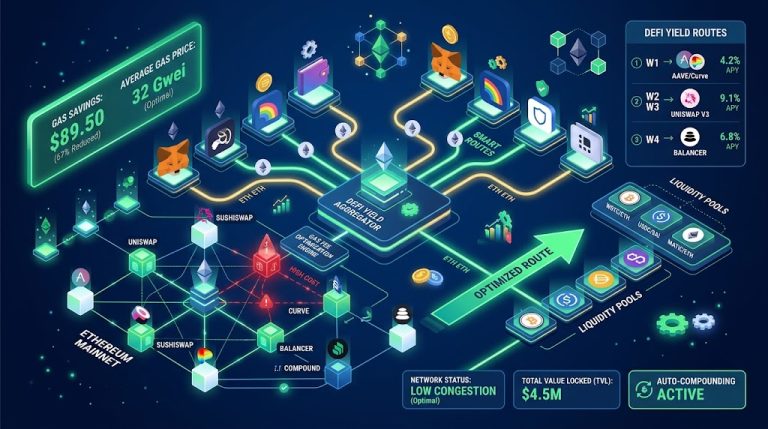
Abstract’s ZK rollup architecture keeps L2 execution fees well below Ethereum mainnet—typically under $0.01 per transaction for standard transfers and swaps. However, bridging ETH from mainnet to Abstract via the official bridge incurs an L1 proof-submission cost. Strategic allocation: bridge once in bulk rather than in multiple small transactions to minimize the per-dollar cost of capital deployment. During periods of Ethereum base fee spikes above 30 Gwei, defer bridge operations or use third-party bridging aggregators such as Relay or Across Protocol to access cheaper proof routes.
Asymmetric Upside Potential: The Core Thesis
The rational case for Abstract participation rests on three compounding factors: a brand with demonstrated secondary-market demand (Pudgy Penguins), a technically credible ZK rollup foundation (ZK Stack proven at scale by zkSync Era), and a consumer-app thesis that targets a less saturated segment than pure DeFi L2s. These factors combine to produce a higher-than-average probability that ABS maintains protocol-level utility over a multi-year horizon—reducing the binary “airdrop farm and dump” risk profile common to lower-conviction chains.
That said, the relatively modest raise and a crowded L2 landscape introduce meaningful downside. This is not a zero-cost opportunity: bridging capital carries smart contract risk, and time allocated to ecosystem interaction has an opportunity cost against other chains. Participants should size exposure accordingly and avoid concentrating resources that cannot be locked for a 6–18 month horizon.
Summary Assessment
Dimension Rating Notes
| Institutional Backing | Medium-High | Brand equity compensates for modest raise |
| Token Necessity | High | Sequencer governance + gas utility |
| Sybil Risk | Medium | Large testnet wallet base dilutes per-wallet value |
| Execution Cost | Low | <$0.01 L2 fees; bridge cost manageable |
| Overall Verdict | Strategic Allocation | Justified for users aligned with the consumer L2 narrative |

Leave a Comment